Podcast Appearance

The Art of Financial Matchmaking for Advisors: Finding the Right Successor

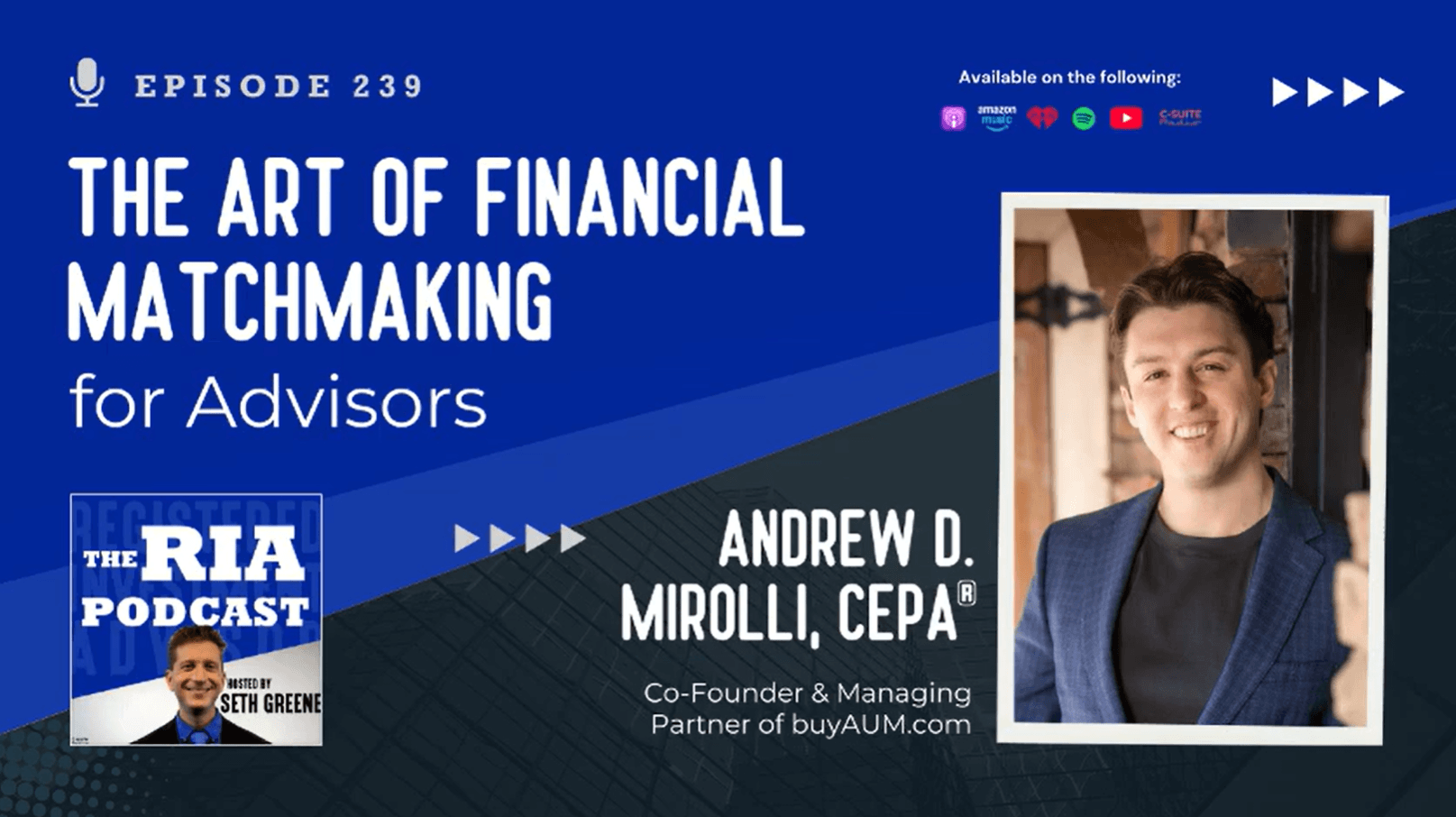
Finding the right successor involves far more than negotiating a purchase price. In this conversation with Seth Greene, buyAUM Co-Founder Andrew Mirolli explains why successful advisor transitions begin with understanding the seller’s personal goals before introducing potential buyers. The discussion covers succession planning, valuation, advisor matchmaking, industry consolidation, and how technology is changing the future of wealth management.
Andrew Mirolli with Seth Greene on the Registered Investment Advisor Podcast.

Key Takeaways

  • Every advisor's succession plan should begin with personal goals, not buyer outreach.
  • The best buyer is often the one who protects clients and culture—not simply the highest bidder.
  • Strong preparation can significantly improve a firm's marketability and valuation.
  • Industry consolidation has created more buyer demand but also more complexity.
  • AI and emerging technology are changing how advisory firms operate and prepare for transition.

buyAUM Perspective

Succession planning is often portrayed as a transaction. In reality, it’s a process of helping advisors navigate one of the most important decisions of their careers.

As buyer demand has increased across the wealth management industry, advisors have more options than ever before. That’s good news—but it also creates new challenges. More buyers, higher valuations, and different deal structures make choosing the right partner significantly more complicated.

The conversation in this episode reinforces a principle that guides every engagement at buyAUM: advisors shouldn’t begin by searching for buyers. They should begin by understanding themselves.

Questions like When do I want to retire? What role do I want after closing? How important is client continuity? What kind of culture do I want my employees to join? should all be answered before discussing valuation or purchase offers.

Another important takeaway is that valuation isn’t fixed. Enterprise value can often be improved through preparation, documentation, recurring revenue quality, client demographics, and operational improvements. Advisors who begin planning several years before retirement frequently have more flexibility, stronger negotiating positions, and better long-term outcomes.

Technology is also reshaping the profession. Artificial intelligence, automation, and digital workflows are changing how advisory firms operate, while blockchain and other emerging technologies continue to influence financial services more broadly. Yet despite these innovations, one thing remains constant: trust.

Financial advising is still a relationship business. The strongest succession plans recognize that clients aren’t simply assets—they’re people who have trusted their advisor for decades. Successful transitions preserve those relationships while helping founders confidently move into the next chapter of their lives.


Episode Highlights

Why Financial Matchmaking Works Better Than Traditional Brokerage

Andrew explains why buyAUM begins every engagement by understanding the advisor's personal and professional goals rather than immediately marketing the firm to buyers. This consultative approach creates better long-term matches for both sellers and acquirers.

Looking Beyond Valuation

While valuation is important, successful transactions also depend on client continuity, employee retention, cultural alignment, and the seller's long-term vision. These factors often determine whether a transition succeeds after closing.

The Impact of Industry Consolidation

As consolidation accelerates across the RIA industry, advisors are receiving more acquisition interest than ever before. Andrew discusses how increased buyer demand creates opportunities while also making thoughtful buyer selection even more important.

How Technology Is Changing Wealth Management

Artificial intelligence, automation, and blockchain continue to reshape financial services. The discussion explores how these technologies may influence advisory businesses while emphasizing that trusted human relationships remain at the center of successful wealth management.

Preparing Years Before Retirement

One of the most valuable ways advisors can improve both valuation and transition outcomes is by beginning succession planning well before retirement. Early planning creates more options and reduces unnecessary pressure when it's time to transition.

Episode Details

Host Name

Seth Greene

Guest

Andrew Mirolli, CEPA®

Published

14/01/2026

Duration

15:39

Frequently Asked Questions

Succession planning is the process of preparing an advisory practice for a future ownership transition while protecting clients, employees, and enterprise value.
The right buyer provides more than a competitive purchase price. They should also align with the seller's culture, client service philosophy, and long-term vision for the business.
Most advisors benefit from beginning succession planning several years before retirement. Starting early allows time to improve valuation, prepare clients, and evaluate multiple transition options.
No. Many advisors choose phased transitions, mergers, partial equity sales, or ongoing consulting roles after the transaction closes.
Growing buyer demand has increased acquisition opportunities and valuations, but it has also made selecting the right buyer more important than ever.
Technology continues to improve efficiency, but trusted advisor-client relationships remain one of the most valuable assets in wealth management.
A professional valuation provides a starting point for understanding your firm's current value and identifying opportunities to strengthen it before a transition.

When should financial advisors begin succession planning?

The strongest transitions begin years before they’re needed. Early planning creates more options, protects client relationships, and helps you transition on your terms.